

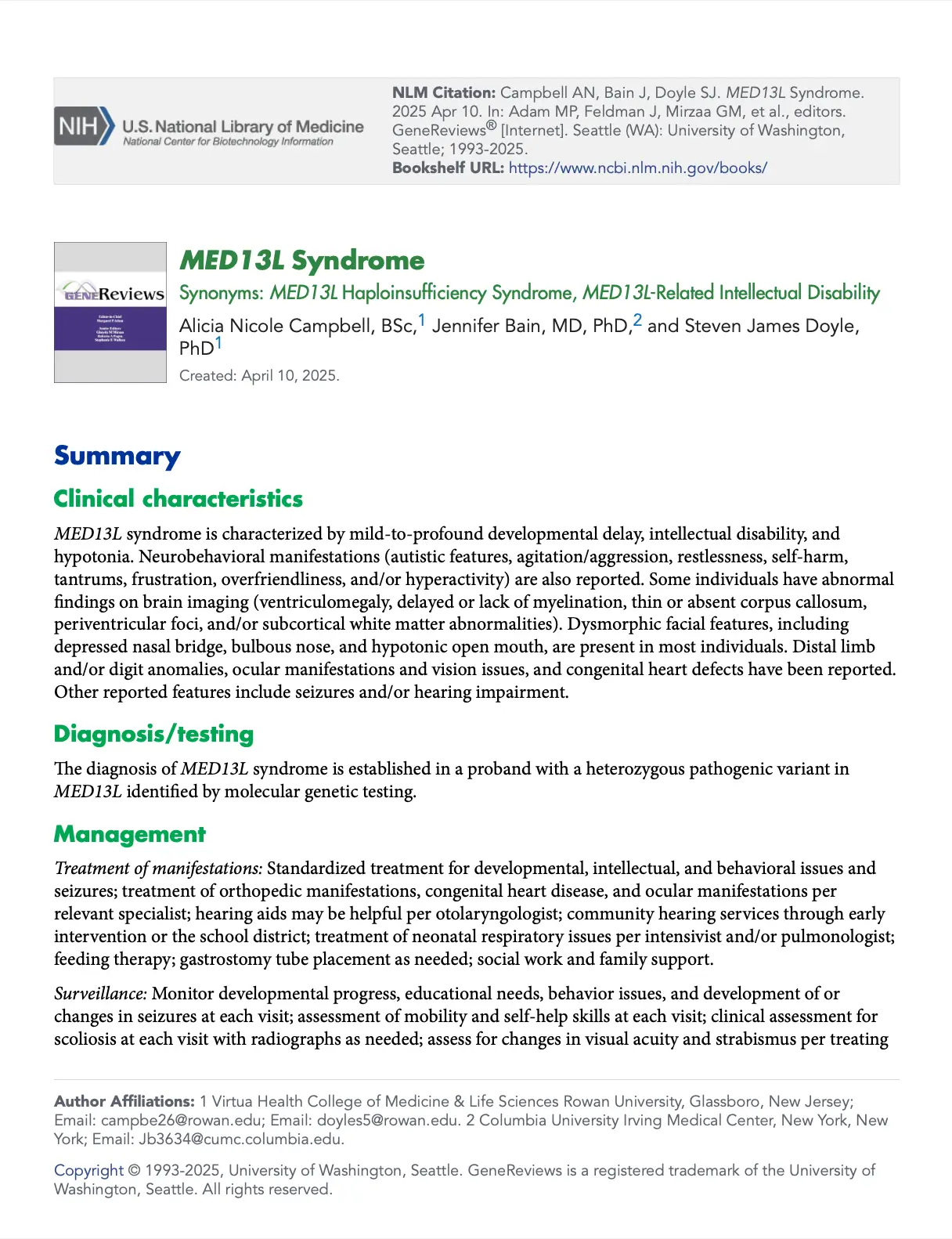
Summary
(Dr. Alicia Campbell, Dr. Jennifer Bain)
- 2025
Key Clinical Features
Core Manifestations (>99% of cases):
- Mild to profound developmental delay
- Intellectual disability (100% – ranging from mild to severe, most commonly moderate)
- Hypotonia (63%)
- Neurobehavioral issues (~60%) – autistic features, agitation/aggression, restlessness, self-harm, tantrums, overfriendliness, hyperactivity
- Characteristic facial features (>99%) – depressed nasal bridge, bulbous nose, hypotonic open mouth
Other Common Features:
- Musculoskeletal abnormalities (51%) – affecting feet/hands
- Ocular manifestations/vision issues (31%) – primarily strabismus
- Congenital heart defects (23%)
- Seizures (22%)
- Brain imaging abnormalities – ventriculomegaly, myelination defects, thin/absent corpus callosum
- Hearing impairment (6%)
Speech and Motor Development
- Speech: 99% have delayed or completely absent speech; many lack expressive language
- Motor milestones: Sitting age 8-17 months; walking age 20 months to 3.5 years (when achieved)
- Most individuals become ambulatory, though some require assistance
Diagnosis
- Confirmed by molecular genetic testing showing heterozygous pathogenic variant in MED13L
- Typically identified through exome/genome sequencing or intellectual disability gene panels
- ~90-95% of variants detected by sequence analysis
- ~5-10% are deletions/duplications
Genetics
- Inheritance: Autosomal dominant
- Most cases: De novo (new mutation, not inherited)
- Rare cases: Inherited from mosaic, apparently unaffected parent
- Penetrance: Complete (100% of people with variant show symptoms)
Genotype-Phenotype Correlations
- Missense variants appear associated with more severe manifestations including:
- Severe motor delay
- Higher rates of seizures
- More frequent absence of speech and ambulation
- Increased autistic features
Management Approach
Treatment of Manifestations:
- Standardized developmental, intellectual, and behavioral interventions
- Anti-seizure medications as needed
- Orthopedic treatment for skeletal issues
- Cardiac management for congenital heart defects
- Ophthalmologic care for vision issues
- Hearing aids when appropriate
- Feeding therapy; gastrostomy tube if needed
- Social work and family support
Surveillance Recommendations:
- Monitor developmental progress, educational needs, and behavior at each visit
- Assess mobility and self-help skills regularly
- Clinical scoliosis screening with radiographs as needed
- Annual audiology evaluation
- Regular ophthalmologic assessment
- Monitor nutritional status and feeding safety
- Screen for aspiration/respiratory insufficiency
Educational/Developmental Support
- Early intervention programs (ages 0-3)
- Developmental preschool (ages 3-5)
- Individualized Education Plans (IEP)
- Physical, occupational, and speech therapy
- Alternative communication methods (AAC devices) when needed
- Applied behavior analysis (ABA) for autism-related behaviors
Molecular Mechanism
- MED13L protein is part of the Mediator complex controlling RNA polymerase II transcription
- Pathogenic variants cause transcriptional defects
- Disease likely results from haploinsufficiency (insufficient protein from one working copy)
- May also cause mislocalization of cyclin C, affecting mitochondrial function
Prognosis
- Life span appears normal – several adults have been reported
- Over 100 published cases to date
- Most individuals require ongoing support and specialized education
- Some achieve relative independence with educational support
Prevalence
- Exact prevalence unknown
- More than 100 published cases
- Likely underdiagnosed due to variable presentation